On this page
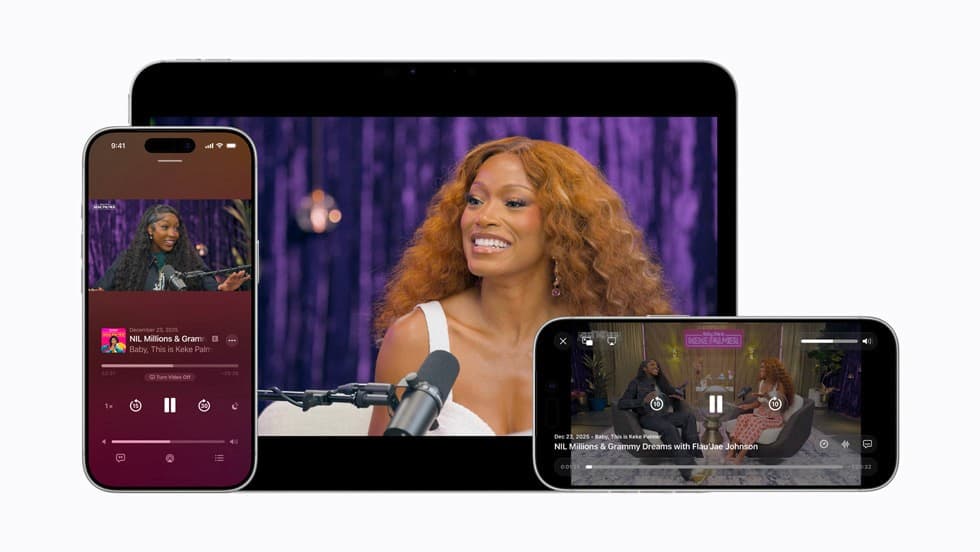
Apple just made its biggest move in podcasting in years: a new, integrated video podcast experience inside Apple Podcasts aimed squarely at YouTube and Spotify.
If you’re a podcast network, media brand, or creator, this is another clear signal that podcasts aren’t just audio anymore — they’re TV (with the distribution and monetization mechanics of platforms).
Below is what changed, why it matters, and how teams should adapt their social video workflow now that “video-first podcasting” is becoming the default.
What Apple announced
Apple’s update brings a best-in-class video playback experience to Apple Podcasts using HTTP Live Streaming (HLS) — the same streaming approach used across modern video platforms. The intent: make watching a podcast as seamless as listening.
The highlights:
- Seamless switching between audio and video inside the same show experience.
- Streaming video that adapts to connection quality, powered by HLS.
- Offline video downloads (so video episodes behave more like traditional podcast downloads).
- Dynamic video ad support, where Apple charges participating ad networks an impression-based fee for delivering dynamic ads.
- Limited initial rollout via major hosting partners (as reported by Podnews): Acast, ART19, Omny Studio, and Simplecast — with video staying hosted by the podcast host, not Apple.
- Availability: currently in developer beta (iOS 26.4) with a broader spring launch.
Why this matters: podcasts are becoming the new TV lineup
The creator economy has already moved to video podcasts — and Apple is late, but serious, in catching up. One industry framing: “Podcasts are taking over daytime television.”
Apple is also starting from behind: Apple Podcasts is reported as the No. 3 platform behind YouTube and Spotify for weekly podcast listeners, and video is a big part of why.
This shift changes what “winning” looks like:
- It’s not just about audio distribution anymore.
- It’s about attention, watch time, clips, and cross-platform discovery.
So… what should creators and media teams do now?
Apple’s move won’t reduce your workload — it increases the upside of being video-first everywhere.
Here’s a practical playbook:
1) Treat every episode like a content engine, not a single asset
Your “episode” should produce:
- the full-length video podcast
- multiple short clips
- platform-native cutdowns (vertical + horizontal)
- a posting schedule across channels
2) Optimize for discovery, not just subscribers
Video pods win because they create a constant stream of shareable moments that travel on TikTok, Reels, Shorts, X, LinkedIn — and now have even more incentive to be video-native on Apple Podcasts too.
3) Build a repeatable workflow (or automation)
As output expectations rise, manual clipping becomes the bottleneck.
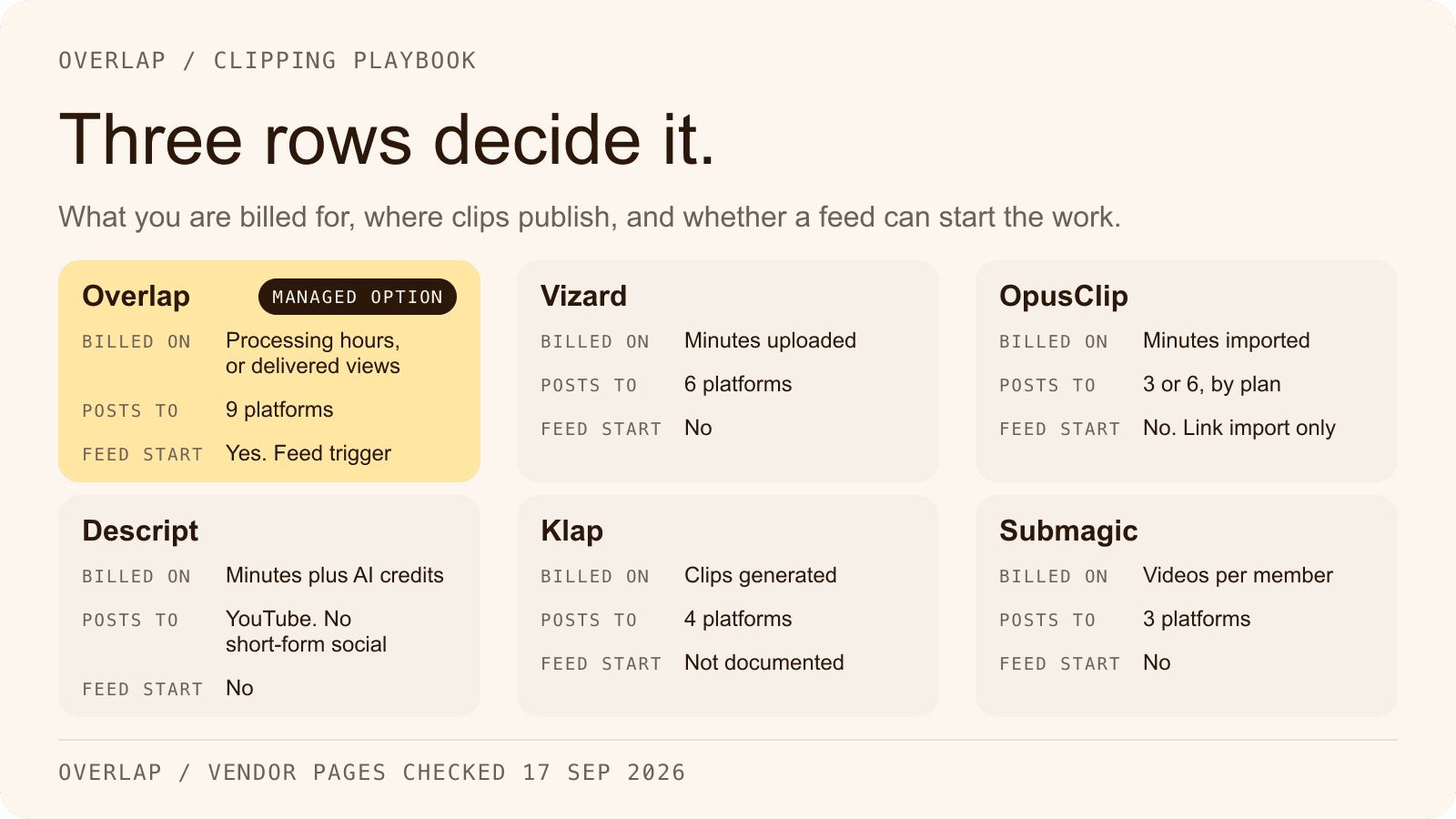
That’s exactly why Overlap exists.
Where Overlap fits in this new world
Overlap is built for the reality that’s accelerating right now: the same long-form show needs to become an always-on social video machine.
The advantage in short form isn’t one-off edits, it’s consistent, scalable distribution. Brands who post across dozens of accounts every day are always going to win.
And we’ve seen what happens when teams operationalize this: iHeart used Overlap to deploy automated clipping agents and scale output across TikTok, YouTube, and Instagram — generating 500M+ views in under six months while reducing total work.