On this page
- 1. Article-to-Video Pipelines
- 2. One Story, Every Format
- 3. AI-Assisted Breaking News Clips
- 4. Automated Captions and Accessibility
- 5. Social-Search Optimization
- 6. Trend-Synced Content Scheduling
- 7. Agentic Content Monitoring
- 8. Personalized and Audience-Specific Cuts
- 9. AI-Powered Performance Analytics
- 10. Transparency and Human-in-the-Loop Editing
- The Playbook Is Already Being Written
Short-form video now dominates how audiences consume news. Nearly one in three consumers start their searches on TikTok, Instagram, or YouTube rather than Google, and that number is climbing. For editors and digital directors, that shift creates a real pressure point: the demand for platform-native video content has outpaced what most newsroom teams can produce manually.
AI closes that gap. Below are ten strategies media organizations can implement right now to scale short-form video production, reach new audiences, and stay editorially credible in the process.
The core principle: AI handles production speed and scale. Journalists handle accuracy and voice. The two aren't in tension — they're a workflow.
1. Article-to-Video Pipelines
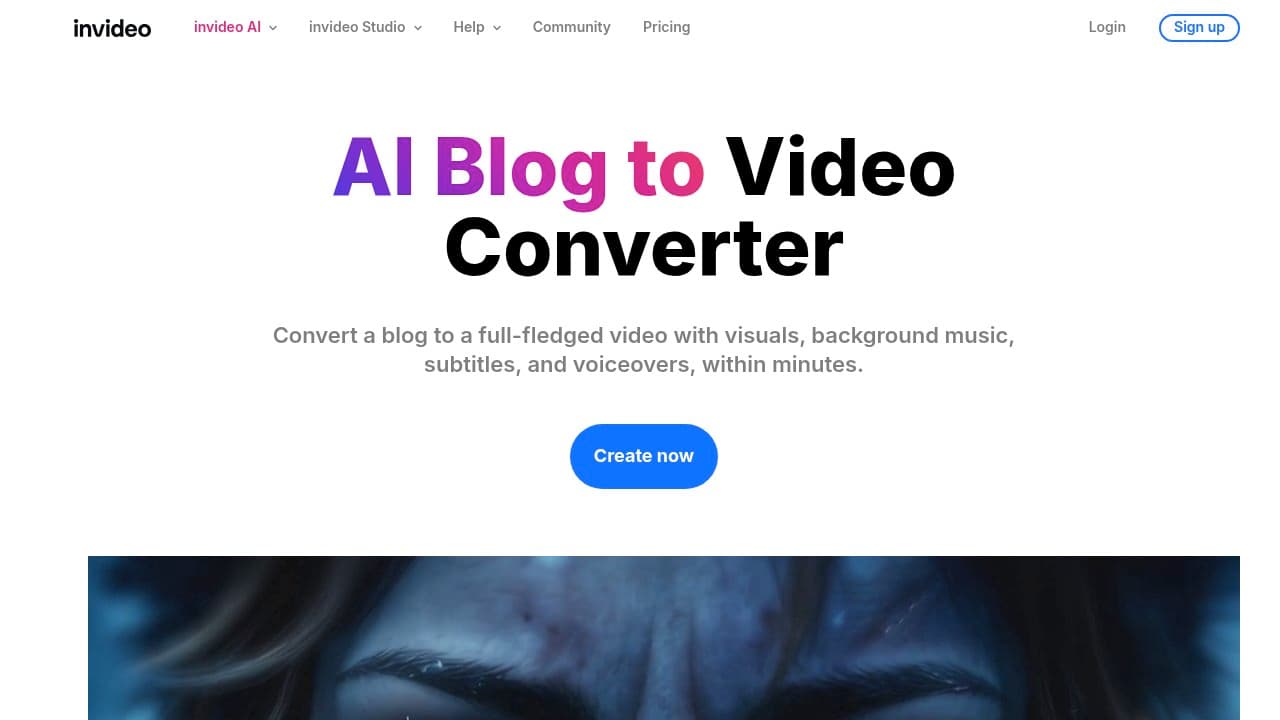
The most immediate win for any newsroom is converting existing written content into video automatically. Tools like InVideo AI and Steve.ai can take a press release, wire story, or published article and generate a social-ready clip complete with narration, auto-selected B-roll, and captions, cutting production time from hours to minutes.
For newsrooms sitting on years of written archives, this is also a content library unlock. Every evergreen story becomes a candidate for a new short-form video without additional reporting.
Bottom line: If your team is still manually producing video from scratch for every story, you're leaving significant capacity on the table.
2. One Story, Every Format
Platform fragmentation is one of the biggest operational headaches in modern newsrooms. A single story now needs a 15-second Reel teaser, a 90-second TikTok explainer, a square cut for LinkedIn, and a full-length YouTube piece — each with different aspect ratios, pacing, and hooks.
AI handles all of that from a single source file. Automated reformatting and pacing adjustments eliminate the need for separate production runs per platform. What used to require a dedicated editor for each output becomes a single workflow with multiple outputs.
- 15 seconds: Reel/Shorts hook — one striking visual, one stat
- 60-90 seconds: TikTok/Reels explainer — context + resolution
- 3-10 minutes: YouTube deep-dive — full story arc
- Square crop: LinkedIn — data-focused, professional framing
This is the strategy that lets a team of five compete with a team of twenty.
3. AI-Assisted Breaking News Clips
Speed is where AI creates the most competitive separation for news organizations. The moment a story breaks, a reporter's script or live wire copy can be fed directly into a video generator to produce a publishable clip in under five minutes.
The Associated Press already uses automated video summaries for earnings reports, a pipeline that produces structured financial video content at scale without human editing intervention. The same logic applies to any high-frequency story type: weather events, court verdicts, election results, market moves.
The real advantage here isn't just speed — it's consistency. Breaking news clips generated from a template-driven AI pipeline maintain brand standards under pressure, when human teams are most likely to cut corners.
4. Automated Captions and Accessibility
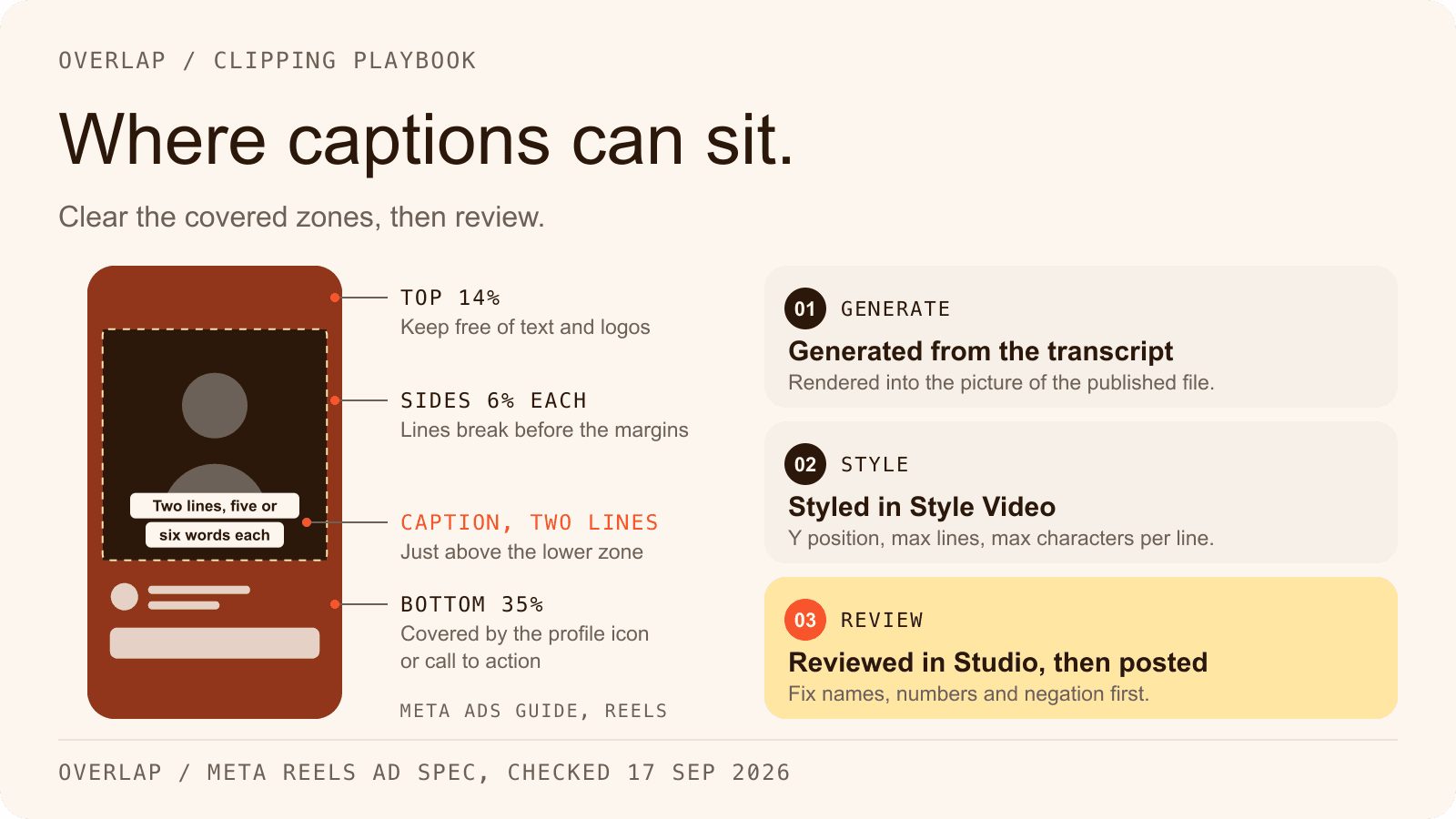
Most social video is consumed silently. Viewers scroll through feeds with sound off, and a clip without captions is effectively invisible to a large portion of the audience. AI auto-captioning solves this at the production level, not as an afterthought.
Beyond the engagement case, there's a reach case. Multilingual AI dubbing and translation can unlock entirely new audience segments at near-zero marginal cost. A local news story with Spanish or Portuguese dubbing added automatically reaches a broader demographic than the same clip in English only.
"Accessibility isn't a feature — it's the baseline. Any clip published without captions in 2026 is leaving audience on the table."
For newsrooms with international ambitions or diverse local communities, automated localization is one of the highest-ROI applications of AI in the entire video workflow.
5. Social-Search Optimization
Search behavior has shifted. Nearly one in three consumers now start searches on TikTok, Instagram, or YouTube rather than Google, particularly among audiences under 35. For newsrooms, that means every short-form video is also a search asset — and should be treated like one.
AI tools can analyze trending search phrases on each platform and embed them naturally into video captions, spoken audio, and on-screen text. This isn't keyword stuffing; it's alignment between what people are searching for and what the clip delivers.
What social-search optimization looks like in practice
- Analyze platform-specific trending queries before publishing
- Embed high-traffic phrases in the first 3 seconds of on-screen text
- Write captions that mirror how audiences phrase questions on TikTok
- Use AI to A/B test caption variations for discoverability
A clip optimized for social search doesn't just reach followers — it reaches anyone searching that topic, turning every video into a long-term discovery asset.
6. Trend-Synced Content Scheduling
Platform algorithms reward content that rides emerging trends early. The challenge for newsrooms is that trend windows are often measured in hours, not days. Manual monitoring can't keep up.
AI systems can watch platform trend signals in real time and recommend, or in some cases auto-generate, clips that align with surging audio, visual styles, or topics. ByteDance's "Trend-Sync" integration is a concrete example: feed a trending audio clip and the AI syncs visuals to it automatically, removing the production bottleneck between identifying a trend and publishing into it.
Why this matters for credibility: Newsrooms that adopt trend-synced scheduling aren't chasing virality for its own sake. They're using the platform's own distribution mechanics to amplify journalism that would otherwise be buried by entertainment content.
7. Agentic Content Monitoring
This is the strategy with the most transformational potential — and the one most newsrooms haven't fully explored yet.
Agentic AI systems can be deployed as always-on monitors watching city council livestreams, press conference feeds, earnings calls, court proceedings, or data streams. These agents transcribe in real time, flag newsworthy triggers based on predefined criteria, and either alert reporters or auto-draft a first video cut for human review.
The operational implication is significant: infrastructure that never sleeps, never misses a public meeting, and never drops a data release. For local newsrooms with shrinking staff, agentic monitoring can cover beats that would otherwise go unwatched.
| Use Case | Agent Action |
|---|---|
| City council vote | Auto-transcribe, flag key motions, draft clip |
| Earnings release | Pull key figures, generate financial summary video |
| Press conference | Transcribe live, surface quotable moments |
| Data dashboard update | Detect change, trigger story alert |
The human role shifts from monitoring to editorial judgment — deciding what gets published, not what gets noticed.
8. Personalized and Audience-Specific Cuts
A single story can mean very different things to different audiences. A data-driven analysis of a city budget plays differently on LinkedIn than it does on TikTok. The tone, pacing, visual style, and even the lead angle should shift by platform and demographic.
AI makes it possible to generate multiple versions of the same story simultaneously, each optimized for a different audience segment:
- LinkedIn: Data-focused, measured tone, professional framing
- TikTok: Energetic, visual-first, hook in the first second
- YouTube: Full context, longer arc, more nuanced analysis
- Instagram Reels: Emotionally resonant, visually striking, shareable
For small newsrooms, this used to be a resource question. With AI handling the variations, it becomes a workflow question. The editorial decision is made once; the production runs in parallel.
9. AI-Powered Performance Analytics
Publishing without analytics is guessing. Publishing with AI-powered analytics is iterating.
The difference between newsrooms that grow their social video audience and those that plateau often comes down to feedback loops. AI analytics layers can identify which video formats, lengths, topics, and posting times drive watch time, shares, and return visits, then feed those signals directly back into content planning.
Metrics worth tracking with AI
- Completion rate by video length and format
- Drop-off points to identify where viewers disengage
- Share and save rates as signals of high-value content
- Audience retention curves across platforms
The output isn't just a dashboard — it's a brief for the next production cycle. Data-informed iteration replaces editorial guesswork, and over time, the newsroom's content strategy becomes a self-improving system.
10. Transparency and Human-in-the-Loop Editing
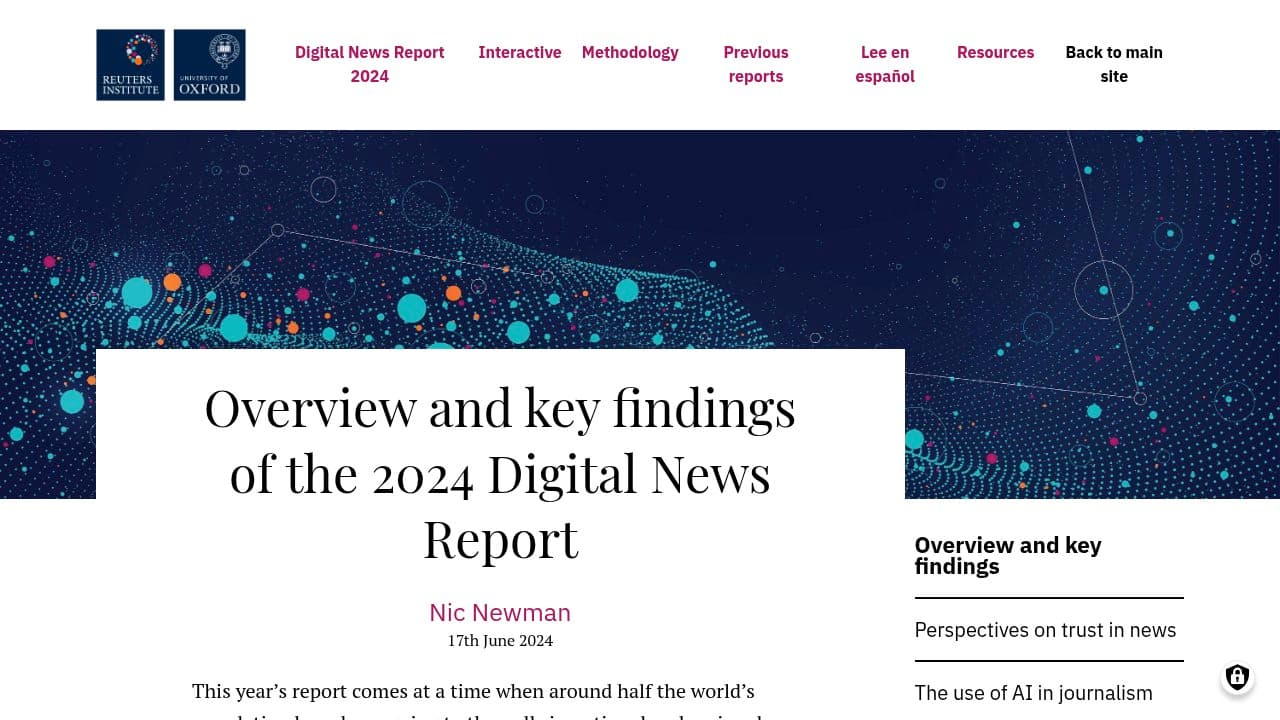
Speed and scale mean nothing if audience trust erodes. The Reuters Institute 2024 Digital News Report found that 59% of people globally are concerned about distinguishing real from fake news online, and audiences remain broadly uncomfortable when AI creates content with only minimal human oversight.
For news organizations, that concern is an existential risk if ignored — and a differentiation opportunity if addressed directly.
The newsrooms building durable social audiences in 2026 are doing two things consistently:
- Labeling AI-assisted content clearly — not burying it in fine print, but making it part of the content's identity
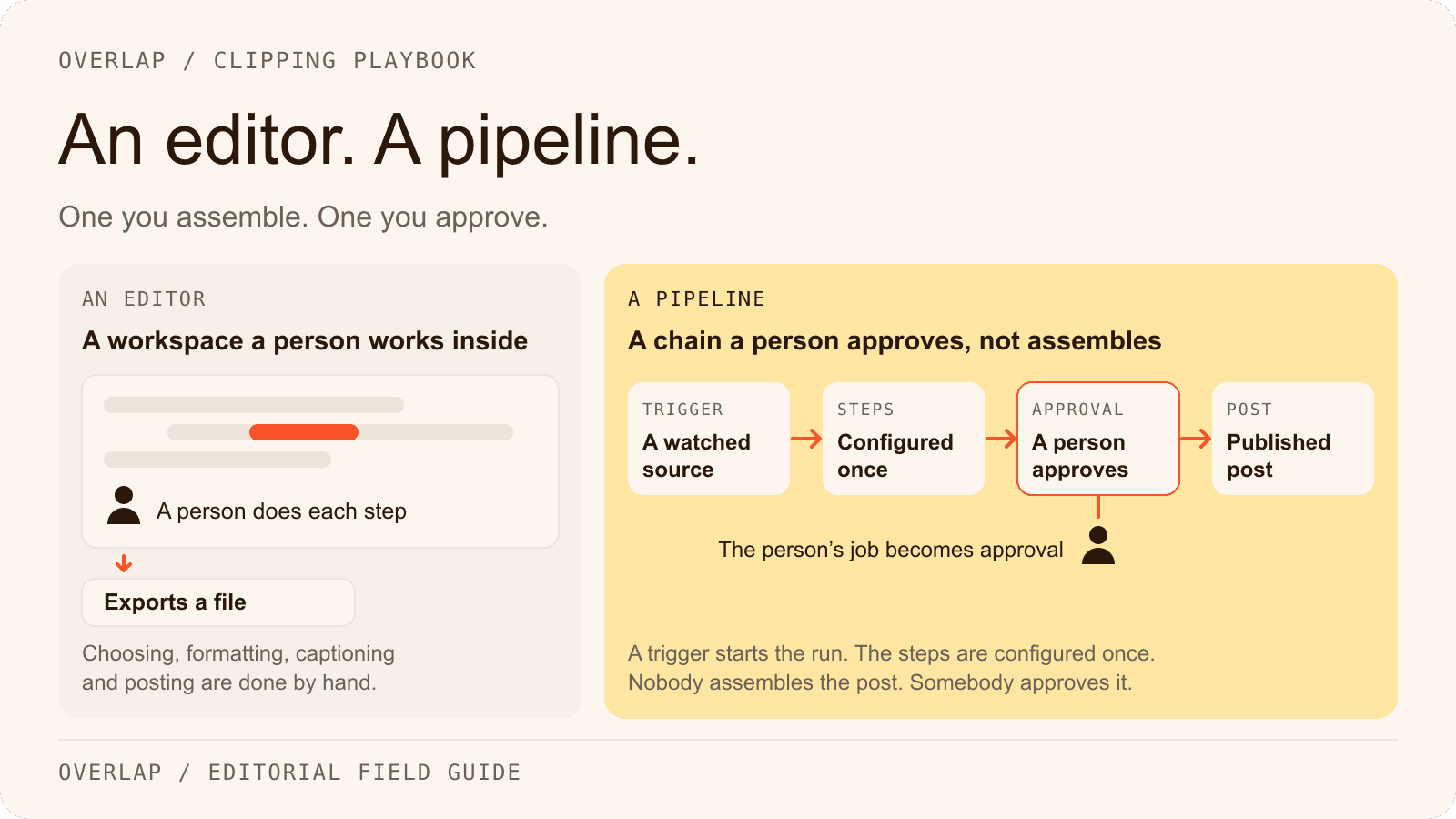
- Keeping journalists in the editorial review loop — AI drafts, humans approve, publish, and stand behind
This human-in-the-loop model isn't a concession to skepticism. It's the right workflow. AI handles the production velocity that modern social platforms demand. Journalists guarantee the accuracy, editorial judgment, and institutional voice that no model can replicate.
The newsrooms that treat transparency as a strategy, not a disclaimer, will build the kind of audience loyalty that algorithmic reach alone can't buy.
The Playbook Is Already Being Written
The gap between newsrooms using AI for video and those still producing manually is widening fast. The ten strategies above aren't experimental — they're being deployed by media organizations right now, from wire services to local TV stations to digital-native publishers.
The competitive question for editors and digital directors isn't whether to adopt AI-powered video workflows. It's how quickly the organization can build the infrastructure, train the team, and establish the editorial guardrails to do it well.
Start with one workflow. Article-to-video pipelines and automated captions are the lowest-friction entry points. Once the team sees the output quality and time savings, expanding into trend monitoring, agentic systems, and multi-platform personalization becomes a much easier internal conversation.
The newsrooms that move now will own the short-form video audience. The ones that wait will spend years trying to catch up.