On this page
Most politicians record a 45-minute speech, post it to YouTube, and call it content. That's a missed opportunity on a massive scale.
The real political currency in 2026 isn't the full recording. It's the 45-second clip that captures the sharpest moment, the clearest policy position, or the most human exchange, and gets it in front of voters on TikTok, Instagram Reels, and YouTube Shorts. Research on the 2025 German federal election found that short-form video platforms have become central to electoral campaigning, particularly for reaching voters under 30 who are unlikely to consume traditional media.
The problem is bandwidth. Campaign teams are already stretched thin. Nobody has time to scrub through a 60-minute town hall looking for the three moments worth clipping. That's exactly where automation changes the game.
This playbook covers what to clip, how to clip it strategically, and how your team can automate the entire workflow with Overlap.
The core principle: Every speech, debate appearance, and podcast interview your candidate records should be treated as raw material for a week's worth of social content.
What's Worth Clipping (And What Isn't)
Not every moment deserves a clip. Campaign teams that try to repurpose everything end up with a feed full of forgettable content. The filter should be ruthless.
Clip these moments
- Sharp policy soundbites: A single sentence that crystallizes a position. "We're not cutting education funding, we're redirecting it to where it actually works." That's a clip.
- Authentic human moments: Laughter, frustration, a genuine reaction to a question. Audiences on TikTok can smell over-produced content. Unpolished authenticity consistently outperforms scripted ads.
- Direct voter questions: Podcast hosts and town hall attendees often ask the questions voters actually have. A clean Q&A exchange, 30 to 60 seconds, performs well because it mirrors how voters search for information.
- Rebuttals and contrasts: A confident, composed response to a tough question signals competence. These clips tend to get shared by supporters as proof points.
- Behind-the-scenes moments: Arriving at an event, talking to staff, reacting to news. These build the "human" dimension that formal speeches can't.
Skip these
- Long policy explanations with no emotional anchor
- Moments where the candidate is looking away, shuffling papers, or mid-thought
- Content that requires context from earlier in the speech to make sense
The 30-60 second rule: According to HubSpot's marketing research, 33% of marketers identify 31 to 60 seconds as the optimal short-form video length. Aim for that window. If the moment is genuinely strong, 90 seconds is acceptable for YouTube Shorts.
Platform-by-Platform Distribution Guide
The same clip doesn't perform equally across platforms. A quick formatting guide for your team:
| Platform | Ideal Length | Format | Tone |
|---|---|---|---|
| TikTok | 30-60 sec | Vertical (9:16) | Authentic, direct, punchy |
| Instagram Reels | 30-90 sec | Vertical (9:16) | Polished but not stiff |
| YouTube Shorts | 60-90 sec | Vertical (9:16) | Can carry more context |
| X (Twitter) | 30-60 sec | Landscape or square | Debate clips, rebuttals |
| 60-120 sec | Landscape or square | Policy, leadership moments |
One clip, reformatted for five platforms. That's the efficiency play.
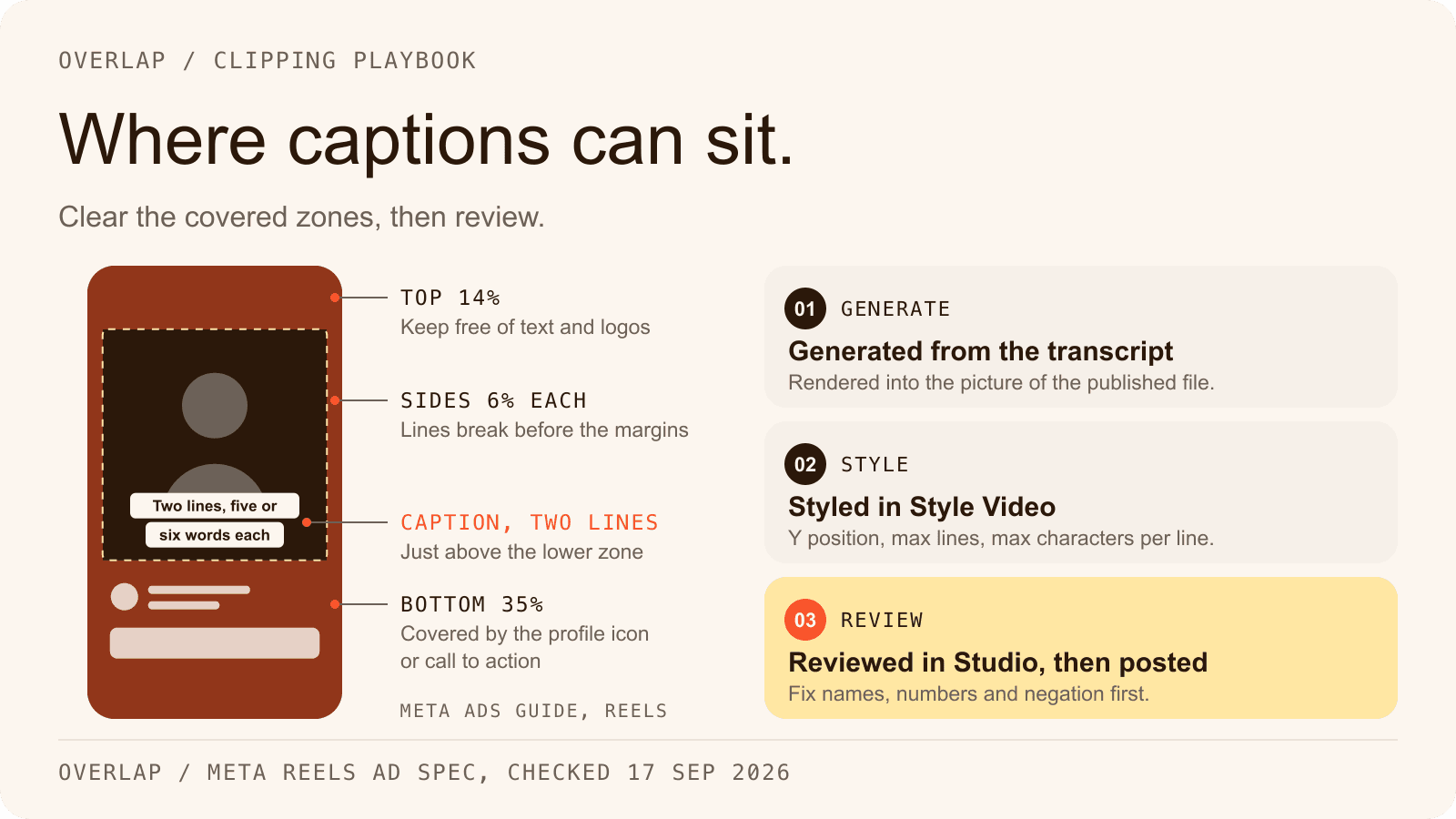
Always add captions. About 55% of TikTok users watch with sound off. Captions aren't optional; they're the difference between a clip that lands and one that gets scrolled past.
How to Automate This With Overlap
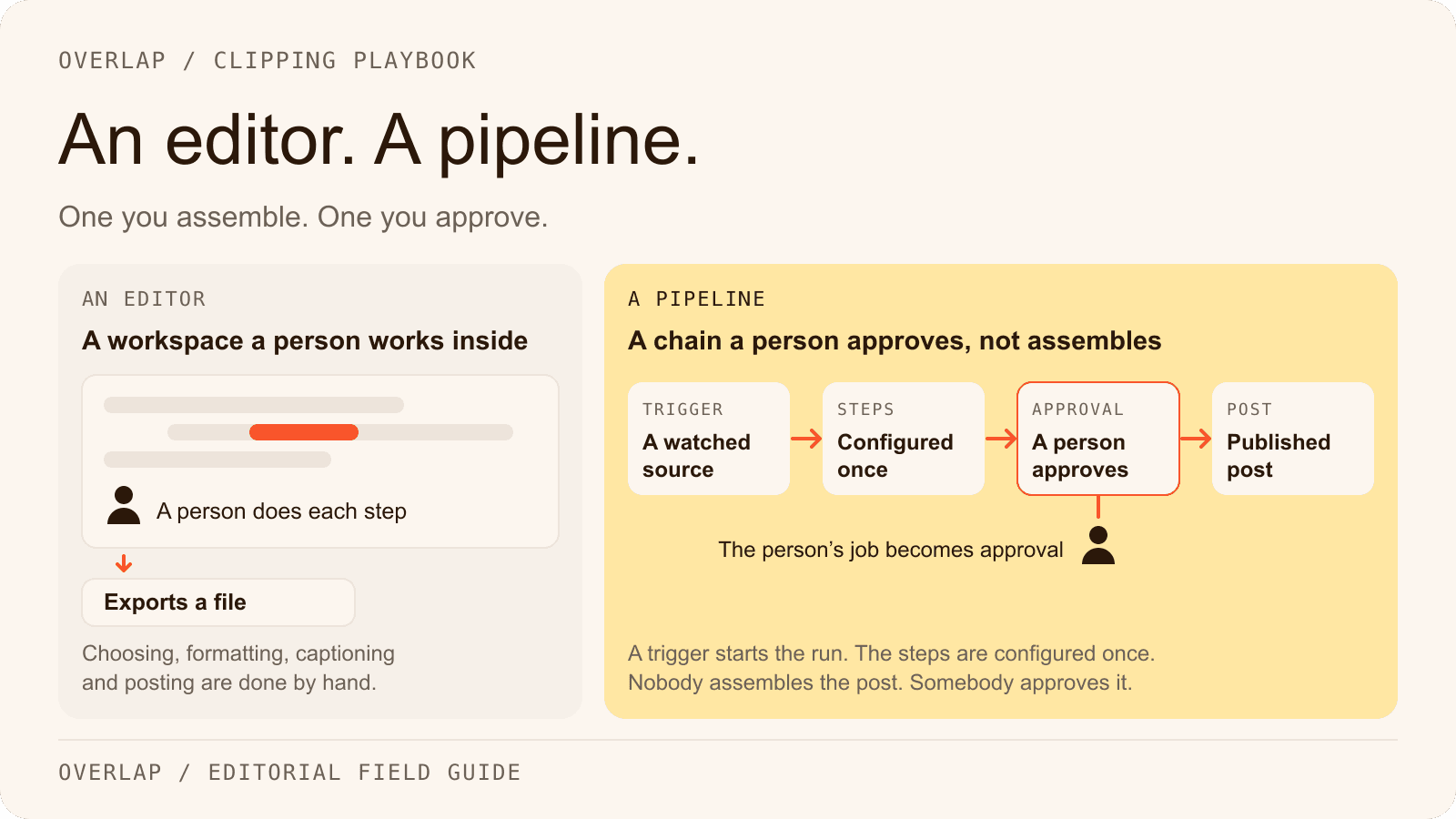
Manual clipping is the bottleneck. A staffer watching a 90-minute town hall to find three usable clips is spending 3+ hours on a task that should take minutes. That's not a sustainable workflow for any campaign team.
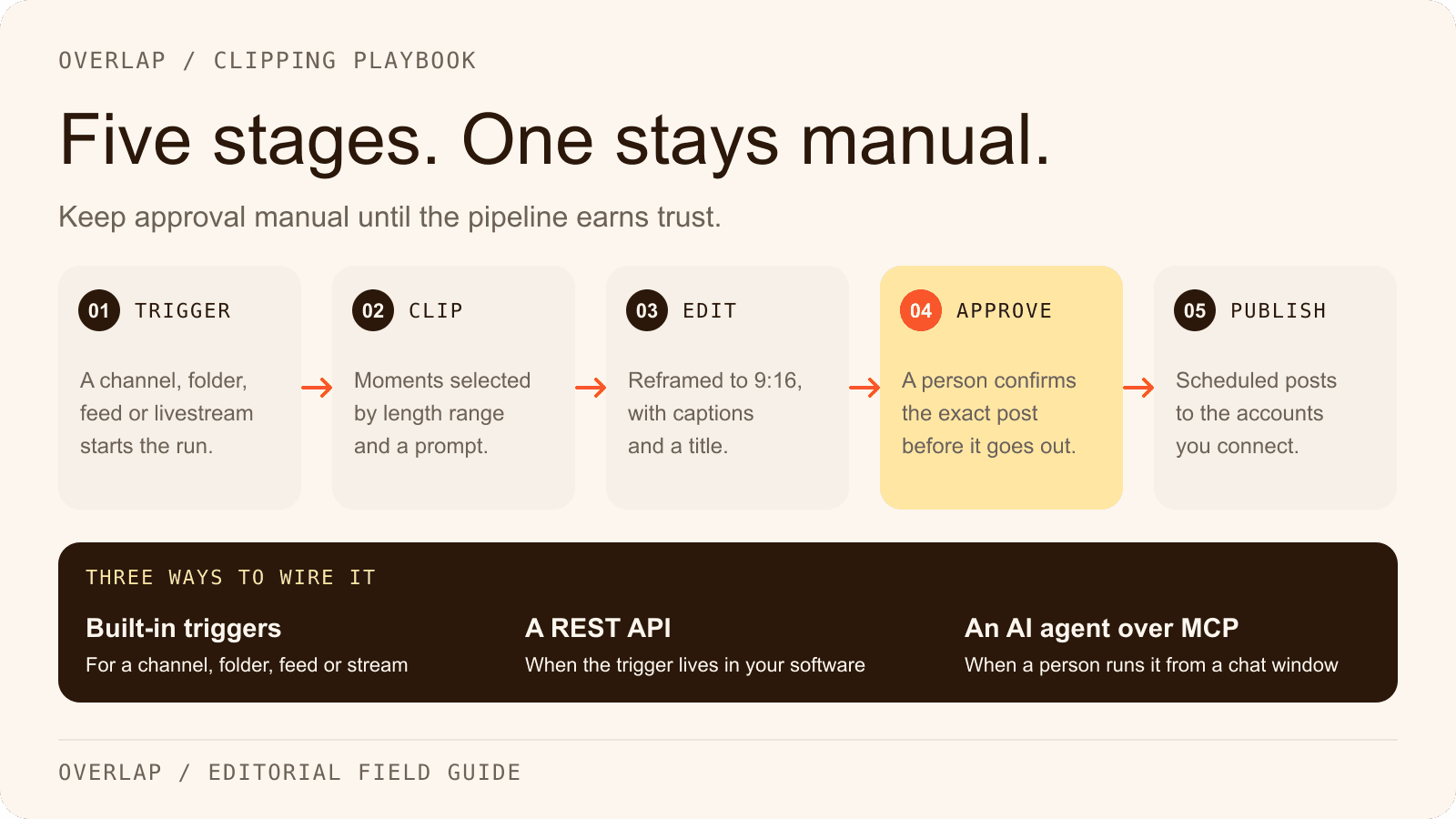
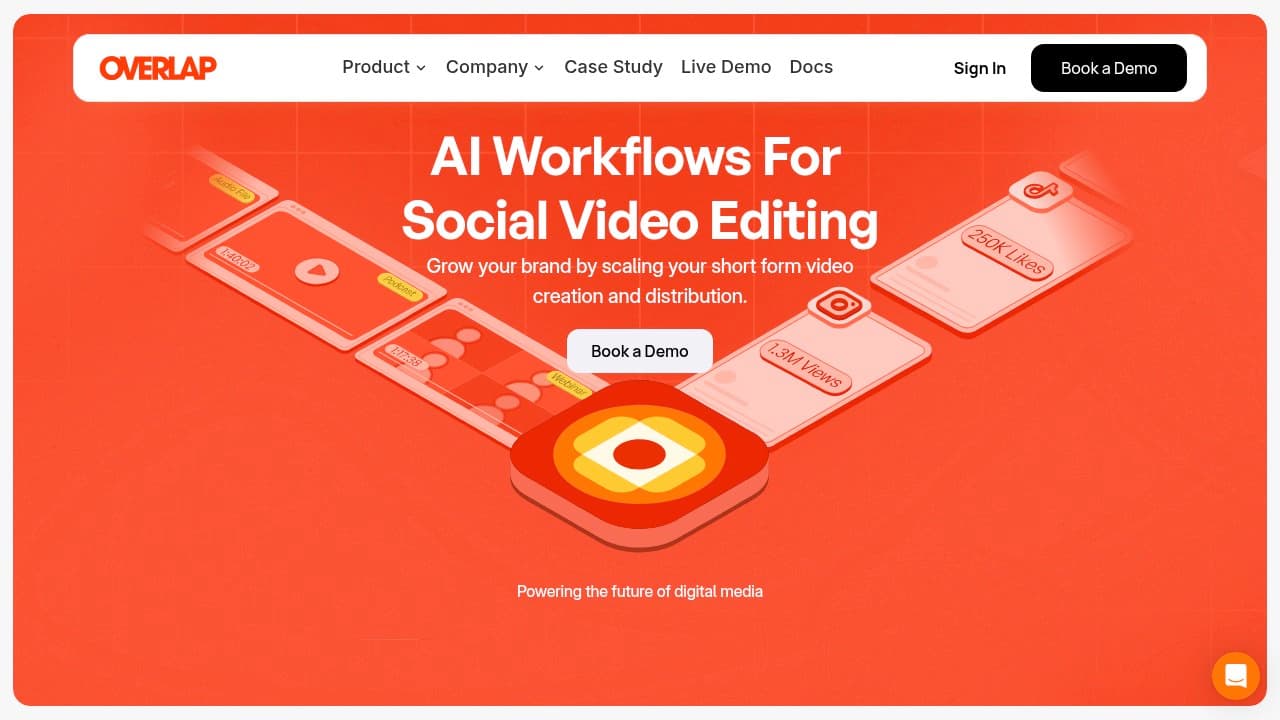
Overlap is built specifically to eliminate that bottleneck. Here's how the workflow looks in practice:
Step 1: Upload the raw footage
Drop in the full speech recording, podcast episode, or debate clip. Overlap accepts any long-form video source.
Step 2: AI identifies the best moments
Overlap's AI scans the entire video and surfaces the highest-impact segments automatically. It looks for moments with strong engagement signals: clear statements, emotional peaks, natural start and end points. Your team reviews a shortlist instead of scrubbing through the whole recording.
Step 3: Auto-format for each platform
Each clip is automatically reframed and resized for vertical (TikTok, Reels, Shorts) and landscape (X, LinkedIn) formats. Captions are generated and burned in. No manual reformatting required.
Step 4: Schedule and publish
Clips are queued directly to your campaign's social accounts. Your team sets the posting schedule; Overlap handles the distribution.
The Bottom Line for Campaign Teams
A single town hall should generate at least 5 to 10 clips. A 60-minute podcast appearance should fuel two full weeks of social content. If it isn't, the team is leaving reach on the table.
The campaigns that win the content game in 2026 aren't the ones with the biggest production budgets. They're the ones with the most efficient repurposing workflows. Every appearance is an asset. Treat it like one.
Ready to automate your campaign's clipping workflow? Start with Overlap and turn your next speech into a full week of social content.