On this page
AI product placement is the practice of adding a branded product to video after it was filmed: a can on a table, a box on a shelf, a bottle on a kitchen counter, placed so that it reads as part of the scene rather than as an overlay. Nobody reshoots anything. The product is built into the existing shot, lit by the room it is placed in, and rendered back into the original footage.
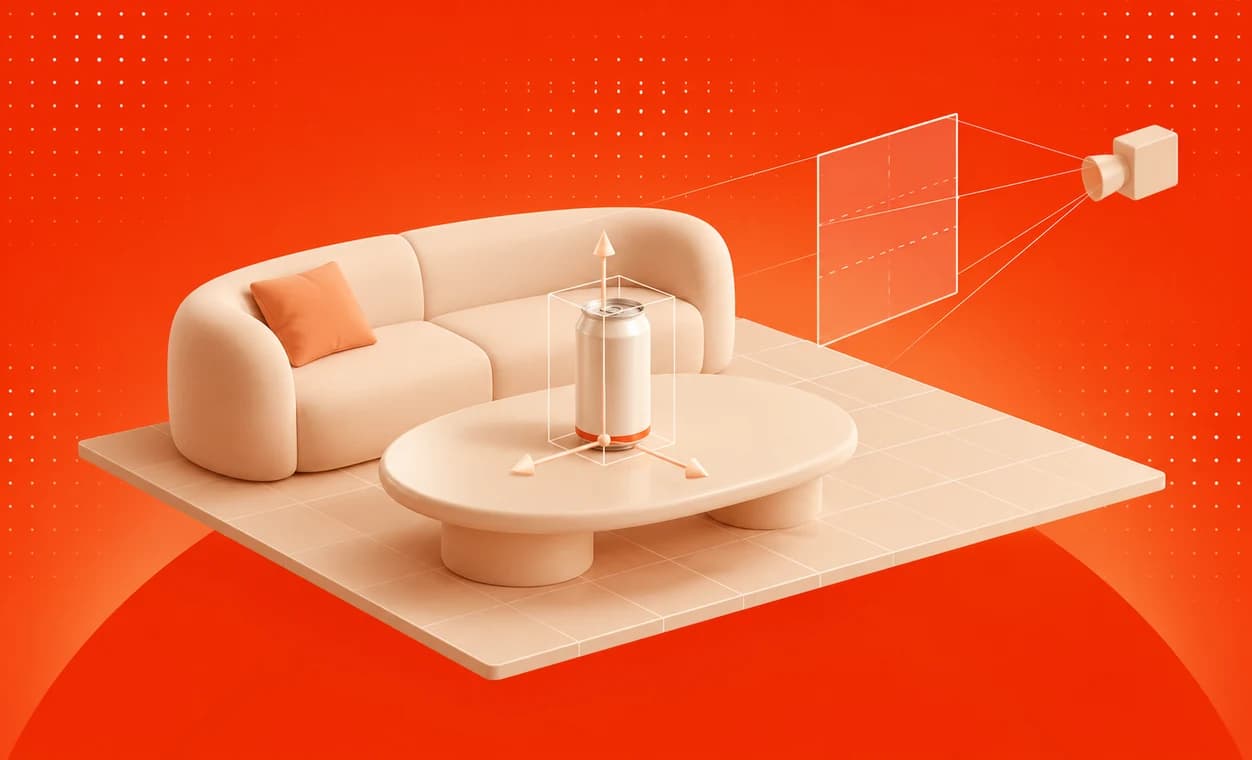
Overlap Product Lab is built for exactly this. It rebuilds your set in 3D from your own footage, lets you place a product on a real surface at real scale, and renders it into the original frames with the room's light and shadows. Everything else in the shot stays as it was filmed. The rest of this article explains the category, the vocabulary around it and the questions worth asking of any tool that offers it, Overlap's included.
What counts as AI product placement?
The practice goes by several names, and they mostly describe the same thing:
- Virtual product placement, often shortened to VPP, is the industry's usual term.
- In-content advertising and digital product integration are the names ad-tech companies tend to use when they sell placements as media.
- Post-production product placement describes when the work happens rather than how.
What unites them is that the product is added to the picture itself, inside the scene, after filming. That separates AI product placement from four neighbours it is often confused with.
| Format | When the brand appears | Where it appears | Can it change later? |
|---|---|---|---|
| AI product placement | Added after filming | Inside the scene, on a real surface | Yes, from the clean master |
| On-set product placement | Decided before filming | Inside the scene | No, it is in the footage |
| Overlay or lower-third | Added after filming | On top of the picture | Yes |
| AI-generated ad | Generated from a prompt | In a scene that never existed | Regenerated each time |
| Shoppable tag | Added after filming | An interactive layer over the player | Yes |
The distinction from AI-generated video matters most, because the two are now sold with the same words. A generative model makes new frames; a placement tool adds one object to frames that already exist. Why generative video models change the rest of the shot covers the difference in detail.
Why do brands and content owners use it?
On-set placement has one hard constraint: the deal has to exist before the camera rolls. A product that was not on the table on the day is not in the episode, and a product that was on the table is in it forever, whether or not the sponsor renews. AI product placement removes that constraint, and four uses follow from it.
- Selling inventory after the fact. A content owner can sell placements in footage that has already been shot, including a back catalog that was recorded with no sponsor at all.
- Changing the brand later. As long as the clean, unbranded master is kept, the same shot can carry a different product for a different market, season or sponsor.
- Avoiding on-set logistics. Nobody has to ship product to a set, brief a props team or reshoot a scene because the label was facing the wrong way.
- Adding a sponsor without interrupting the content. The product sits in the scene while the conversation carries on. Nothing stops for a read.
What on-set placement keeps is interaction: a host can pick up a real product and use it. AI product placement vs traditional product placement compares the two in full.
Streaming platforms have run programs on this idea for some time. Amazon introduced a virtual product placement beta for Prime Video and Freevee originals in 2022, and its advertising terms, last updated September 11, 2026, still list Virtual Product Placement as a beta product. Amazon Ads additional terms For video podcasters, whose set is the same every week, the case is even simpler; product placement for video podcasts works through it.
What makes a placement look real?
A placed product is believable when it obeys the same physics as everything else in the shot. Six properties decide it, and they are the ones to inspect in any demo.
- Geometry. The product stands on a real surface, at a real-world size, in the shot's perspective. A can that is the wrong scale for the table it stands on reads as wrong before a viewer can say why.
- Camera motion. If the camera moves, the product moves with the set rather than sliding across it.
- Light. The product is lit from the direction the room is lit from, at the room's brightness and colour. An evenly lit, neutral-white product on a warm set looks pasted on.
- Shadow and contact. A shadow on the surface under the product is what makes it sit, rather than hover.
- Occlusion. When a hand or a person passes in front of the product, the product should disappear behind them.
- Everything else is untouched. The faces, the set, the grade and the resolution are the ones that were filmed.
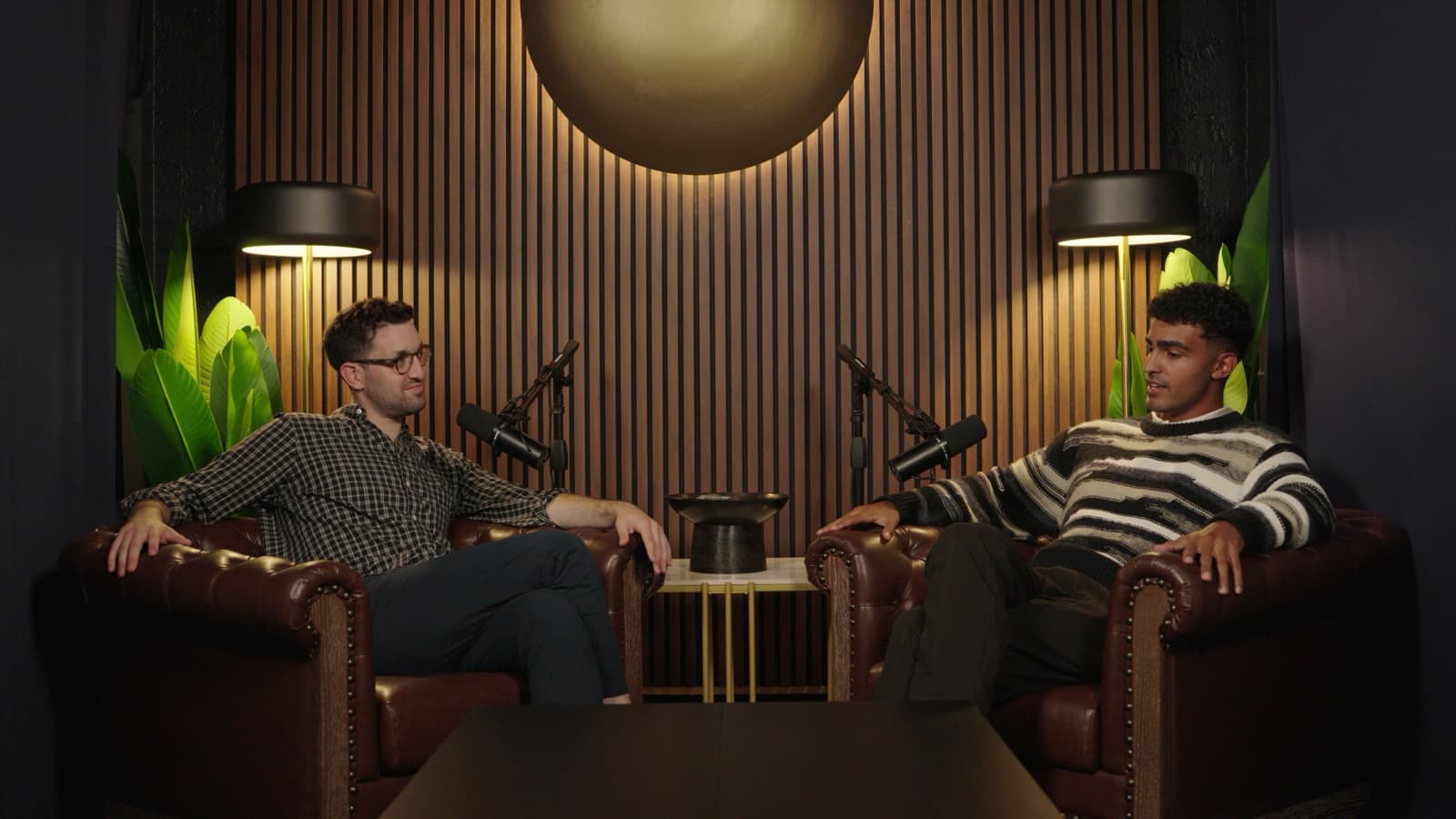
Product Lab is built around geometry, light, shadow and the last of the six. It reconstructs the room from the footage, measures the light at the exact spot the product will stand, casts the product's shadow onto the real surface, and composites it back into the original frames at the source resolution. On the Product Lab page, the same podcast take is shown with and without a can; the can and its shadow are the only change.
How AI product placement works goes through each of those stages in order.
Where does AI product placement work best?
The best ground is a stable surface that stays in view: a desk, a table, a kitchen counter, a shelf behind a presenter. Recurring sets are better still, because one well-chosen spot is inventory in every episode shot there. Locked-off or smoothly moving cameras, long segments and consistent lighting all make the job easier.
It is harder, or not possible, in a few situations:
- Interaction. Placement adds an object to the environment. It does not make a host pick up the product, drink from it or talk about it. A spoken endorsement is still a host read.
- Constant occlusion. A spot that hands cross every few seconds is a poor spot.
- Chaotic camera work. Fast handheld movement, heavy motion blur and rapid cuts leave little stable surface to work with.
- The wrong context. A product placed in a segment where the hosts criticise its category, or a competitor, is a problem no renderer can fix.
Does AI product placement need to be disclosed?
Generally, yes. A paid placement is advertising whether a props team or a renderer put it there, and the disclosure rules for sponsored content apply to it. What that means in practice depends on where the video is published. AI product placement disclosure rules summarises the requirements from the FTC, Ofcom, the EU and the major platforms.
How do you get started?
Start with one shot you already own that has a clear surface in view, one product, and a brand contact who can approve the spot. How to do AI product placement walks through the steps, and the best AI product placement tools compares the options. To see a placement on your own footage, book a Product Lab demo.
Frequently Asked Questions
What is virtual product placement?
Virtual product placement is the practice of adding a branded product to video after it was filmed, so that it appears inside the scene as if it had been there on the day. It is also called AI product placement, in-content advertising and post-production product placement.
Is AI product placement the same as an AI-generated ad?
No. An AI-generated ad creates new frames from a prompt, so the scene itself is synthesised. AI product placement adds one object to footage that already exists and leaves the rest of the picture as it was filmed.
Can AI product placement be added to videos that were already recorded?
Yes. Working on finished footage is the point of it. A placement can go into a new episode after the shoot or into a back catalog that was recorded without any sponsor, as long as the shot has a suitable surface in view.
Does AI product placement change the rest of the video?
It should not. With Overlap Product Lab, the product is composited into the original frames at the source resolution, and nothing outside the product and its shadow is regenerated, so the people, the set and the grade stay as they were filmed.
Can a placed product be changed to a different brand later?
Yes, if the clean master is kept. Because the product is added in post-production, the unbranded original remains, and the same shot can be placed again with a different product for another sponsor, market or season.
Do placed products need to be disclosed?
Usually, yes. A paid placement is advertising however it was produced, so the sponsored-content rules of the country and the platform where the video is published apply, such as the FTC's guidance in the United States and Ofcom's rules for UK broadcasters.